Here is a version of our final coursework. It is perfectly watchable small screen but the full quality is on the DVD version, which we recommend you watch for its truer depiction of our work:
Showing posts with label Rachel. Show all posts
Showing posts with label Rachel. Show all posts
Monday, 22 April 2013

Monday, 1 April 2013
Evaluation of Appeal of Our Film to Audience
Our evaluation of the ways in which we hope our film will attract our target audience. Please pause to read individual comments more slowly. This is also intended to be viewed on DVD as it is one of the extras often provided.
Progress in Research and Planning
Prelim:
We did not have a chosen target audience for our prelim task, we given an outline of a situation that we had to follow and certain criteria that had to be met, such as: dialogue, someone walking out of the scene, and shot reverse shot. We did not create a storyboard for this piece.
Our prelim did not follow a specific genre type, therefore we did not have any music playing that would relate to the genre nor did we have a script.
It is therefore not surprising that the sequence feels disjointed and does not convey any real meaning to the audience.
Final Task:
We watched the opening of many films from our chosen genre of Chick Flicks. This enabled us to recognise common techniques for the genre in terms of camera angles, sound, editing and mise-en-scene, for example being set in a school, having girls as the main characters, and the use of non-transparent very visible editing to create a fun and light-hearted feel.
 For our final task we produced a storyboard, which included every shot, with the decided composition and specific camera movements. We decided not to include much dialogue in our final piece as dialogue is introduced at the end of the first two minutes as we found in our research of our chosen genre.
Progress:
The fact that we conducted all this research for the final task helped us identify the specific elements that had to be included in our piece, which we did not focus on in the prelim task. Therefore making is easier to identify the genre of the piece.
Progress in Storyboarding and Scripting
Prelim:
For prelim task we didn't have a story board or a script. We were given a basic outline of what turns the piece had to take and basically made it upon the spot. Our planning was disorganised, we chose where we were going to film on the spot, obviously this wasn't thought through as well as it should have been, because the lack of space caused framing issues.
Final Task:
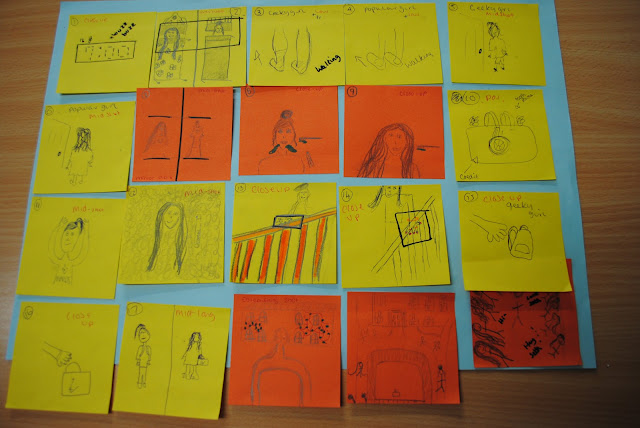
In contrast we planned out each scene and drew each shot so we knew exactly what we were doing when we turned up to our filming location. In fact, our storyboard went through several drafts and was detailed by the time we came to film:
We had written up a script previously so we knew what was being said, but on the first day of filming we improvised what the girls would say to their mothers and they were leaving, so not everything was as fully planned out as we hoped, but still much improved from the prelim task.
We put much more thought into our location, but again we still had to work with what worked best and what was best and easiest for us in general. For example, when we were filming in the bathroom, space was an issue, but worked best for the shot. Also, proximity to the school had to be taken into consideration when choosing our location due to limited time and locations.
Our piece makes more sense than our prelim tasks, this is because no planing was involved when making our prelim therefore it was a bit random.
With our piece it is clear to the audience what is going on. Our storyboard helped us when filming- we were able to refer to it during production whereas we had nothing of the sort during our prelim task.
Progress in Camera Work
Prelim:
We used the tripod for the entire thing, we encountered problems when we were trying to keep the tripod straight, this made some of our shots off balance. We still werent familiar with using the camera at the time, and our planning and how we developed the characters wasn't good.
Camera movements were tricky for example we cut off Rebekah's head a couple of times so the piece didn't look very professional and gave it an unfinished look.
We struggled to use playback when filming the prelim and we recorded over work. Also as we struggled to use it, we didn't watch over what we had filmed so were unable to see what problems we needed to amend.
As we were new to using the camera and how to move them, we struggled to make out tracking shot look effective and have a smooth finish.
Final Task:
This time round we were much more confident with the use of the camera and tripod, making it easier to film. From previous experience we thought that using the tripod throughout the filming was appropriate for our particular production. Although we were confident with the camera we did have to re-film certain moments in our piece where we used handheld camera instead of a tripod.When we watched this back we realised the shots were evidently moving, giving it an untidy finish.Therefore we switched to filming these parts with a tripod, and this created a steady shot.
We found major improvements with our camera work from when we filmed our prelim task. Although we did not use any of our panning shots in our final piece (as it did no fit in with the film) they were much tidier than the prelim task panning shots. Our panning shots were more professional and smooth showing big progress in our camera work.
We naturally used a much wider range of camera angles and distances due to having planning time and a whole day of filmin as an initial shoot with pick ups on other days, whereas in our prelim task we only had a lesson period.
Progress in Editing
Prelim:
In our prelim task we were inexperienced with Final Cut Express and this meant that the editing was a slow process.
We weren't familiar with the continuity issues that could occur, and the fact that two different shots could jump because of a gap in editing. This occurred in our prelim task when there is a jump between two shots because we did not check it in editing.
We did not have any sound apart from dialogue and did not have any experience of using Live Type for credits.
Final Task:
We used layering capacity of Final Cut more effectively to achieve our effects of credits, split screen, and using a page turn effect.
We were more careful with continuity as we understood from our prelim task that it easy to make a mistake. We did this by enlarging the tracks to check we were cutting at exactly the right moment for continuity to be perfectly precise.
We used effects and transitions carefully for example making sure that the page turns were at the right moment, and making sure that the non-diegetic music faded in and out at the right time so the dialogue could be heard.
We included titles, credits and production idents using other programmes such as Livetype, and Photoshop and imported these into our piece. We gained experience from using these where we had no experience from our prelim task. We also used Photoshop to animate our ident:
Progress
We gained a greater understanding of the potential of the editing packages and how they can be combined.
We used a large range of effects
A more layered product created
Editing was less time consuming as we were confident with the tools and layout of the site.
Prelim:
We did not have a chosen target audience for our prelim task, we given an outline of a situation that we had to follow and certain criteria that had to be met, such as: dialogue, someone walking out of the scene, and shot reverse shot. We did not create a storyboard for this piece.
Our prelim did not follow a specific genre type, therefore we did not have any music playing that would relate to the genre nor did we have a script.
It is therefore not surprising that the sequence feels disjointed and does not convey any real meaning to the audience.
Final Task:
We watched the opening of many films from our chosen genre of Chick Flicks. This enabled us to recognise common techniques for the genre in terms of camera angles, sound, editing and mise-en-scene, for example being set in a school, having girls as the main characters, and the use of non-transparent very visible editing to create a fun and light-hearted feel.
Progress:
The fact that we conducted all this research for the final task helped us identify the specific elements that had to be included in our piece, which we did not focus on in the prelim task. Therefore making is easier to identify the genre of the piece.
Progress in Storyboarding and Scripting
Prelim:
For prelim task we didn't have a story board or a script. We were given a basic outline of what turns the piece had to take and basically made it upon the spot. Our planning was disorganised, we chose where we were going to film on the spot, obviously this wasn't thought through as well as it should have been, because the lack of space caused framing issues.
Final Task:
In contrast we planned out each scene and drew each shot so we knew exactly what we were doing when we turned up to our filming location. In fact, our storyboard went through several drafts and was detailed by the time we came to film:
We had written up a script previously so we knew what was being said, but on the first day of filming we improvised what the girls would say to their mothers and they were leaving, so not everything was as fully planned out as we hoped, but still much improved from the prelim task.
We put much more thought into our location, but again we still had to work with what worked best and what was best and easiest for us in general. For example, when we were filming in the bathroom, space was an issue, but worked best for the shot. Also, proximity to the school had to be taken into consideration when choosing our location due to limited time and locations.
Our piece makes more sense than our prelim tasks, this is because no planing was involved when making our prelim therefore it was a bit random.
With our piece it is clear to the audience what is going on. Our storyboard helped us when filming- we were able to refer to it during production whereas we had nothing of the sort during our prelim task.
Progress in Camera Work
Prelim:
We used the tripod for the entire thing, we encountered problems when we were trying to keep the tripod straight, this made some of our shots off balance. We still werent familiar with using the camera at the time, and our planning and how we developed the characters wasn't good.
 |
| Tripod off balance |
 |
| Poor framing |
 |
| Poor composition of shot |
 |
| Did not notice person in background while filming |
Camera movements were tricky for example we cut off Rebekah's head a couple of times so the piece didn't look very professional and gave it an unfinished look.
We struggled to use playback when filming the prelim and we recorded over work. Also as we struggled to use it, we didn't watch over what we had filmed so were unable to see what problems we needed to amend.
As we were new to using the camera and how to move them, we struggled to make out tracking shot look effective and have a smooth finish.
Final Task:
This time round we were much more confident with the use of the camera and tripod, making it easier to film. From previous experience we thought that using the tripod throughout the filming was appropriate for our particular production. Although we were confident with the camera we did have to re-film certain moments in our piece where we used handheld camera instead of a tripod.When we watched this back we realised the shots were evidently moving, giving it an untidy finish.Therefore we switched to filming these parts with a tripod, and this created a steady shot.
We found major improvements with our camera work from when we filmed our prelim task. Although we did not use any of our panning shots in our final piece (as it did no fit in with the film) they were much tidier than the prelim task panning shots. Our panning shots were more professional and smooth showing big progress in our camera work.
We naturally used a much wider range of camera angles and distances due to having planning time and a whole day of filmin as an initial shoot with pick ups on other days, whereas in our prelim task we only had a lesson period.
Progress in Editing
Prelim:
In our prelim task we were inexperienced with Final Cut Express and this meant that the editing was a slow process.
We weren't familiar with the continuity issues that could occur, and the fact that two different shots could jump because of a gap in editing. This occurred in our prelim task when there is a jump between two shots because we did not check it in editing.
We did not have any sound apart from dialogue and did not have any experience of using Live Type for credits.
Final Task:
We used layering capacity of Final Cut more effectively to achieve our effects of credits, split screen, and using a page turn effect.
 |
| Page curl |
 |
| Split screen and credits |
We were more careful with continuity as we understood from our prelim task that it easy to make a mistake. We did this by enlarging the tracks to check we were cutting at exactly the right moment for continuity to be perfectly precise.
We used effects and transitions carefully for example making sure that the page turns were at the right moment, and making sure that the non-diegetic music faded in and out at the right time so the dialogue could be heard.
We included titles, credits and production idents using other programmes such as Livetype, and Photoshop and imported these into our piece. We gained experience from using these where we had no experience from our prelim task. We also used Photoshop to animate our ident:
 |
| Ident on Photoshop |
Progress
We gained a greater understanding of the potential of the editing packages and how they can be combined.
We used a large range of effects
A more layered product created
Editing was less time consuming as we were confident with the tools and layout of the site.
Evaluation of what we have learned about Technologies
Please use the link below to see our presentation discussing what we have learned about technologies through carrying out our coursework:
Presentation on Slideshare but better quality on DVD!
Presentation on Slideshare but better quality on DVD!
Sunday, 10 March 2013
Evaluate how your product used, developed,or challenged the forms and Conventions of real Media Products

|

- Easy to make predictions from our opening- shows relationships starting- shows conflicts
- Audience feedback gave us confidence in our piece as they recognised it as a ‘chick-flick’/ ‘teen drama’ immediately and could guess how everything would develop.
- Could be some concerns about being predictable / unoriginal - but this is a genre people enjoy for its comfortable familiarity, not to be shocked or surprised so it is not surprising we have stuck to conventions so completely.
| TITLE 1,2,3 |
- Pink text on top of a picture of a photo album – the font gives a sense of being someone’s handwriting - establishes feminine nature of genre.

- Pink photo album - sense of storing memories / year book feel
- Colour pink is used to link in with the ‘chick-flick’ genre - notice how it is a key accent colour on this shelf of DVDs:
 CREDITS 4 |
- Appear when there is a split screen next to the clips of the characters.
- Pink ‘handwritten’ font- links with the ‘chick-flick’ theme.
- The credits appear next to the clip, the clips are presented as small squares, and there is a pink background – all this is to give the sense of the inside of a photo album and a sense the girls' life is being 'written' - lack of verisimilitude associated with genre.
- ·High angle during the split screen of both girls in bed enables the viewer to see the girl’s bedroom revealing their personalities - often seen in film openings and was made very popular by 90s teen drama Dawson's Creek:

- Two shot and close up is used when Seth helps Rosie pick up her books. This can be typical camera work in chick-flicks/teen-dramas as there is often love interests and relationships and the two shot show intimacy between two people. It is often totally obvious who will get together from the beginning of the film, but this is not the pleasure of watching - the pleasure comes from seeing how they eventually fall in love as in "10 Things I Hate About You"

- A close up of Charlie is used to show her emotions. This close-up is used to make the viewer feel negatively against Charlie as a character as she is giving dirty looks to Rosie, a character the viewer is positioned to like. Having a clear 'villain' who taunts the 'good girl' is also a common feature of our genre from Rizzo in "Grease" onwards, and they are easily identified through close ups:
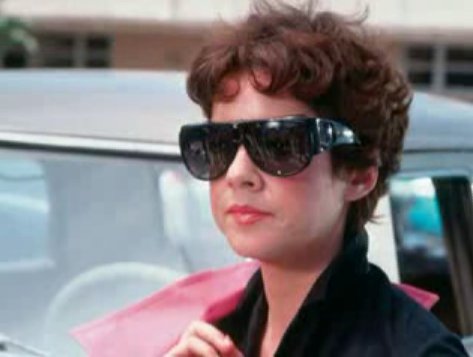
Like this character, they often follow a redemptive arc through the story and end up being more likeable at the end.
CHARACTERS 5,6,9
|
- ‘Chick-flick’/ ‘teen-drama’ usually follow one character throughout and usually have a conflict between the main character and one other- which we show in ‘Just a Girl’
- In teen- dramas/ chick-flicks there are often two or more juxtaposed
- Our two main characters are ‘girls’ which common in a ‘chick flick'
- We cast two girls who were quite the opposite. The ‘geek’ is significantly smaller than the ‘popular’ girl. Making it realistic for the geek to be picked on and intimidated by the popular girl.
- The ‘geek’ is represented as not having any friends- following the social conventions of the geeky characters being lonely and unpopular.
- We cast two other girls to play the friends of the ‘popular’ girl- having similar characteristics to the popular girl portrayed a stereotypical representation of a ‘type’ of teenager as seen in this classic canteen scene from "Mean Girls":

- The geek character is portrayed as vulnerable which follows the stereotypical social conventions of a ‘geek’-this representation of the ‘geek’ character is shown in ‘Princess Diaries’ – being nervous and vulnerable to bullying.
- The love interest is represented as popular- having friends around him.
- Typically teen dramas are set in high schools/ secondary schools- which is the case in ‘Just a Girl’
- Costume plays a big factor in a ‘Chick-flick’/ ‘Teen-drama’. It defines the characteristics of the characters.
- The costumes are usually exaggerated to make it clear of the characteristics
- Teen dramas often use props like make-up, mobile phones, and books to define characters.
- Both of the girls houses, when first filmed, didn’t really define their characters, the set just looked like two plain bedroom and bathrooms- didn’t emphasise their characteristics. When we re-filmed we had more props to show the portrayal of both girls. More make-up products in the bathroom of the popular girl, and books surrounding the geeky girl in bed, exaggerated their characters
- The location of the scene was realistic because it was filmed in an actual school. This enabled the set to include lockers and props that would stereotypically be associated with a school.
- Costumes are all the same or similar as realistically people would be dressed similarly in a school- although accessories and props define the differences. In most teen dramas/ chick-flicks the geek wears glasses and to exaggerate that she is a geek we put Rosie in glasses in ‘Just a Girl’. A popular girl in a teen-drama/chick-flick normally has a perfectly kept hair, jewellery, make-up and altered uniform- and we have met this representation with Charlie in ‘Just a Girl’.
- Rosie (the geek) carries round a rucksack, while Charlie ‘(popular) carries a handbag, shows that Rosie is more worried about something that is practical rather than what is seen as ‘cool’.
- Rosie carries books in the corridor and busy in her locker while Charlie is with her friends.
- We used split screen to show the comparison/contrast between the two girls.
- We used ellipsis during the piece in order to introduce the main characters and the school as quickly as possible.
- When split screen wasn’t used in the opening, we used cross-cutting to show the girls waking up and going through their morning routine. This allows the viewer to easily compare both girls, as we cross-cut to them doing similar routine things.
- In the first two minutes more screen time is given to Rosie (the geek), not only because she is the main character, but because we want the viewer to immediately sympathise with her as a character.
| SOUND |
- During research we found that music almost always plays at the very beginning, if not all the way through the first two minutes of a chick-flick/ teen-drama.
- We had two types of non-diegetic music playing through the first two minutes. The first type was played at the introduction of the piece, when the girls were waking up and doing the morning routine- this track was of the ‘pop’ genre which links with the teenage audience and the two characters. The second track is more of the ‘rock’ genre both of these genres are genres that can be related to teenagers.
- Although there isn’t much dialogue in the first two minutes if ‘Just a Girl’ the dialogue included is essential for defining the characters personalities. Charlie’s threatening dialogue of ‘have you done my homework’ suggests not only that she is a bully, but that Rosie is vulnerable for being used as a ’slave’, and also the fact that Charlie has asked Rosie to do her homework follows the stereotypical representation of a ‘geek’ being clever and enjoying work.
- Dialogue from Seth ‘You alright there, Rosie’ suggests he has a nice side and that there could be a possible relationship between these two characters.
Subscribe to:
Posts (Atom)