Here is a version of our final coursework. It is perfectly watchable small screen but the full quality is on the DVD version, which we recommend you watch for its truer depiction of our work:
Showing posts with label Rebecca M. Show all posts
Showing posts with label Rebecca M. Show all posts
Monday, 22 April 2013

Monday, 1 April 2013
Evaluation of Appeal of Our Film to Audience
Our evaluation of the ways in which we hope our film will attract our target audience. Please pause to read individual comments more slowly. This is also intended to be viewed on DVD as it is one of the extras often provided.
Progress in Research and Planning
Prelim:
We did not have a chosen target audience for our prelim task, we given an outline of a situation that we had to follow and certain criteria that had to be met, such as: dialogue, someone walking out of the scene, and shot reverse shot. We did not create a storyboard for this piece.
Our prelim did not follow a specific genre type, therefore we did not have any music playing that would relate to the genre nor did we have a script.
It is therefore not surprising that the sequence feels disjointed and does not convey any real meaning to the audience.
Final Task:
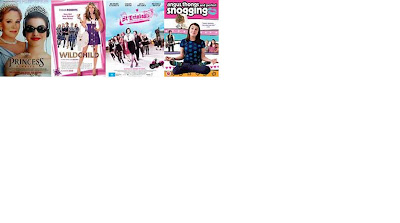
We watched the opening of many films from our chosen genre of Chick Flicks. This enabled us to recognise common techniques for the genre in terms of camera angles, sound, editing and mise-en-scene, for example being set in a school, having girls as the main characters, and the use of non-transparent very visible editing to create a fun and light-hearted feel.
 For our final task we produced a storyboard, which included every shot, with the decided composition and specific camera movements. We decided not to include much dialogue in our final piece as dialogue is introduced at the end of the first two minutes as we found in our research of our chosen genre.
Progress:
The fact that we conducted all this research for the final task helped us identify the specific elements that had to be included in our piece, which we did not focus on in the prelim task. Therefore making is easier to identify the genre of the piece.
Progress in Storyboarding and Scripting
Prelim:
For prelim task we didn't have a story board or a script. We were given a basic outline of what turns the piece had to take and basically made it upon the spot. Our planning was disorganised, we chose where we were going to film on the spot, obviously this wasn't thought through as well as it should have been, because the lack of space caused framing issues.
Final Task:
In contrast we planned out each scene and drew each shot so we knew exactly what we were doing when we turned up to our filming location. In fact, our storyboard went through several drafts and was detailed by the time we came to film:
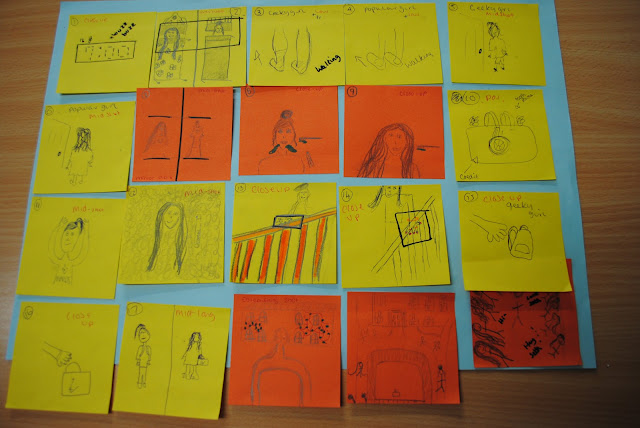
We had written up a script previously so we knew what was being said, but on the first day of filming we improvised what the girls would say to their mothers and they were leaving, so not everything was as fully planned out as we hoped, but still much improved from the prelim task.
We put much more thought into our location, but again we still had to work with what worked best and what was best and easiest for us in general. For example, when we were filming in the bathroom, space was an issue, but worked best for the shot. Also, proximity to the school had to be taken into consideration when choosing our location due to limited time and locations.
Our piece makes more sense than our prelim tasks, this is because no planing was involved when making our prelim therefore it was a bit random.
With our piece it is clear to the audience what is going on. Our storyboard helped us when filming- we were able to refer to it during production whereas we had nothing of the sort during our prelim task.
Progress in Camera Work
Prelim:
We used the tripod for the entire thing, we encountered problems when we were trying to keep the tripod straight, this made some of our shots off balance. We still werent familiar with using the camera at the time, and our planning and how we developed the characters wasn't good.
Camera movements were tricky for example we cut off Rebekah's head a couple of times so the piece didn't look very professional and gave it an unfinished look.
We struggled to use playback when filming the prelim and we recorded over work. Also as we struggled to use it, we didn't watch over what we had filmed so were unable to see what problems we needed to amend.
As we were new to using the camera and how to move them, we struggled to make out tracking shot look effective and have a smooth finish.
Final Task:
This time round we were much more confident with the use of the camera and tripod, making it easier to film. From previous experience we thought that using the tripod throughout the filming was appropriate for our particular production. Although we were confident with the camera we did have to re-film certain moments in our piece where we used handheld camera instead of a tripod.When we watched this back we realised the shots were evidently moving, giving it an untidy finish.Therefore we switched to filming these parts with a tripod, and this created a steady shot.
We found major improvements with our camera work from when we filmed our prelim task. Although we did not use any of our panning shots in our final piece (as it did no fit in with the film) they were much tidier than the prelim task panning shots. Our panning shots were more professional and smooth showing big progress in our camera work.
We naturally used a much wider range of camera angles and distances due to having planning time and a whole day of filmin as an initial shoot with pick ups on other days, whereas in our prelim task we only had a lesson period.
Progress in Editing
Prelim:
In our prelim task we were inexperienced with Final Cut Express and this meant that the editing was a slow process.
We weren't familiar with the continuity issues that could occur, and the fact that two different shots could jump because of a gap in editing. This occurred in our prelim task when there is a jump between two shots because we did not check it in editing.
We did not have any sound apart from dialogue and did not have any experience of using Live Type for credits.
Final Task:
We used layering capacity of Final Cut more effectively to achieve our effects of credits, split screen, and using a page turn effect.
We were more careful with continuity as we understood from our prelim task that it easy to make a mistake. We did this by enlarging the tracks to check we were cutting at exactly the right moment for continuity to be perfectly precise.
We used effects and transitions carefully for example making sure that the page turns were at the right moment, and making sure that the non-diegetic music faded in and out at the right time so the dialogue could be heard.
We included titles, credits and production idents using other programmes such as Livetype, and Photoshop and imported these into our piece. We gained experience from using these where we had no experience from our prelim task. We also used Photoshop to animate our ident:
Progress
We gained a greater understanding of the potential of the editing packages and how they can be combined.
We used a large range of effects
A more layered product created
Editing was less time consuming as we were confident with the tools and layout of the site.
Prelim:
We did not have a chosen target audience for our prelim task, we given an outline of a situation that we had to follow and certain criteria that had to be met, such as: dialogue, someone walking out of the scene, and shot reverse shot. We did not create a storyboard for this piece.
Our prelim did not follow a specific genre type, therefore we did not have any music playing that would relate to the genre nor did we have a script.
It is therefore not surprising that the sequence feels disjointed and does not convey any real meaning to the audience.
Final Task:
We watched the opening of many films from our chosen genre of Chick Flicks. This enabled us to recognise common techniques for the genre in terms of camera angles, sound, editing and mise-en-scene, for example being set in a school, having girls as the main characters, and the use of non-transparent very visible editing to create a fun and light-hearted feel.
Progress:
The fact that we conducted all this research for the final task helped us identify the specific elements that had to be included in our piece, which we did not focus on in the prelim task. Therefore making is easier to identify the genre of the piece.
Progress in Storyboarding and Scripting
Prelim:
For prelim task we didn't have a story board or a script. We were given a basic outline of what turns the piece had to take and basically made it upon the spot. Our planning was disorganised, we chose where we were going to film on the spot, obviously this wasn't thought through as well as it should have been, because the lack of space caused framing issues.
Final Task:
In contrast we planned out each scene and drew each shot so we knew exactly what we were doing when we turned up to our filming location. In fact, our storyboard went through several drafts and was detailed by the time we came to film:
We had written up a script previously so we knew what was being said, but on the first day of filming we improvised what the girls would say to their mothers and they were leaving, so not everything was as fully planned out as we hoped, but still much improved from the prelim task.
We put much more thought into our location, but again we still had to work with what worked best and what was best and easiest for us in general. For example, when we were filming in the bathroom, space was an issue, but worked best for the shot. Also, proximity to the school had to be taken into consideration when choosing our location due to limited time and locations.
Our piece makes more sense than our prelim tasks, this is because no planing was involved when making our prelim therefore it was a bit random.
With our piece it is clear to the audience what is going on. Our storyboard helped us when filming- we were able to refer to it during production whereas we had nothing of the sort during our prelim task.
Progress in Camera Work
Prelim:
We used the tripod for the entire thing, we encountered problems when we were trying to keep the tripod straight, this made some of our shots off balance. We still werent familiar with using the camera at the time, and our planning and how we developed the characters wasn't good.
 |
| Tripod off balance |
 |
| Poor framing |
 |
| Poor composition of shot |
 |
| Did not notice person in background while filming |
Camera movements were tricky for example we cut off Rebekah's head a couple of times so the piece didn't look very professional and gave it an unfinished look.
We struggled to use playback when filming the prelim and we recorded over work. Also as we struggled to use it, we didn't watch over what we had filmed so were unable to see what problems we needed to amend.
As we were new to using the camera and how to move them, we struggled to make out tracking shot look effective and have a smooth finish.
Final Task:
This time round we were much more confident with the use of the camera and tripod, making it easier to film. From previous experience we thought that using the tripod throughout the filming was appropriate for our particular production. Although we were confident with the camera we did have to re-film certain moments in our piece where we used handheld camera instead of a tripod.When we watched this back we realised the shots were evidently moving, giving it an untidy finish.Therefore we switched to filming these parts with a tripod, and this created a steady shot.
We found major improvements with our camera work from when we filmed our prelim task. Although we did not use any of our panning shots in our final piece (as it did no fit in with the film) they were much tidier than the prelim task panning shots. Our panning shots were more professional and smooth showing big progress in our camera work.
We naturally used a much wider range of camera angles and distances due to having planning time and a whole day of filmin as an initial shoot with pick ups on other days, whereas in our prelim task we only had a lesson period.
Progress in Editing
Prelim:
In our prelim task we were inexperienced with Final Cut Express and this meant that the editing was a slow process.
We weren't familiar with the continuity issues that could occur, and the fact that two different shots could jump because of a gap in editing. This occurred in our prelim task when there is a jump between two shots because we did not check it in editing.
We did not have any sound apart from dialogue and did not have any experience of using Live Type for credits.
Final Task:
We used layering capacity of Final Cut more effectively to achieve our effects of credits, split screen, and using a page turn effect.
 |
| Page curl |
 |
| Split screen and credits |
We were more careful with continuity as we understood from our prelim task that it easy to make a mistake. We did this by enlarging the tracks to check we were cutting at exactly the right moment for continuity to be perfectly precise.
We used effects and transitions carefully for example making sure that the page turns were at the right moment, and making sure that the non-diegetic music faded in and out at the right time so the dialogue could be heard.
We included titles, credits and production idents using other programmes such as Livetype, and Photoshop and imported these into our piece. We gained experience from using these where we had no experience from our prelim task. We also used Photoshop to animate our ident:
 |
| Ident on Photoshop |
Progress
We gained a greater understanding of the potential of the editing packages and how they can be combined.
We used a large range of effects
A more layered product created
Editing was less time consuming as we were confident with the tools and layout of the site.
Evaluation of what we have learned about Technologies
Please use the link below to see our presentation discussing what we have learned about technologies through carrying out our coursework:
Presentation on Slideshare but better quality on DVD!
Presentation on Slideshare but better quality on DVD!
Sunday, 10 March 2013
Evaluate how your product used, developed or challenged the forms and conventions of real life media.
 1. Title
- Opens with a girly photo album where a page turn transition was put in place and the title in a feminine font in bright pink against a softer pink back ground.
- It ties in well with our genre of chick flick/teen drama with the use of bright feminine colours that appeal to our target audience and the fact that all the colours used are high key showing the story line is light hearted and up lifting and not to be taken seriously.
2. Credits
- The names of our two main characters appear in bright pink and elaborate font and are presented in the blank space that has a baby pink background when the split screen is used.
- Our producer and director name will be shown before the actors’ names, in a simple way and equally on a simple background.
- We intended to put the credits in from the start as soon as the music begins. However, this proved that too much was happening on screen and looked untidy and was distracting to the actions taking place.
- However, it is often the case in our genre that the credits are almost part of the action and we hope we have achieved that to some extent.
3&4. Characters
- Chick flick/teen drama films are about portraying an exaggerated way of life in a glamorous way allowing the audience to envy the lifestyles portrayed and dream. With these teenage themes such as gossiping and bullying are used to give the film credibility perhaps use situations that could arise in a real school with extras to make it gripping and entertaining.
- Characters that are usually used in chick flick and teen dramas are centred around social groups and the particular stereotypes within the existing social group.
- Often consisting of the popular girl who has a privileged lifestyle, confident characteristics and surrounded by friends and boys. And the contrasting character of the nerdy girl, who focuses on work, has few friends and is represented as being quiet.
- Our main characters are females as it is a teen drama. The secondary characters are the back -up friends (the ‘posse’) and boyfriends that are both genders.
- We cast two teenage girls with contrasting appearances linking to our conventions therefore following out genre.
- The secondary characters such as the group of friends that are friends with the popular girl are all girls and her boyfriend is the hunk of the school, which fits into our genre conventions.
- The popular girl is shown as having glamorous surroundings and being spoilt with the way she talks to her mother whilst the nerdy girl is shown to have manners and more basic surroundings. The popular girl in many chick flicks is usually associated with having ‘too much’ money for her own good emphasising her ‘perfect’ life making the nerdy girl seem more common and like everyone else (unoriginal).
- The use of a rich popular girl and the more working-middle class girl is shown a lot in teen drama programmes and films such as ‘Surbugatory’, where these two contrasting girls have had different up-bringing’ and different privileges in life.
5&6. Mise-en-scene
- Typically set around school grounds and bedrooms.
- Usually big blockbuster stars are casted especially to play to popular girl role as it perhaps more believable. However, in some cases such as ‘Angus Thongs and Perfect snogging’ unknown actors were used and this added a sense of mystery into the story and made it perhaps easier for the audience to relate to the characters.
- Use of academic stereotypical props such as glasses, books and clichéd activities like library club as well as on the other hand we used designer bags, makeup and phone were used to create a wide division between the two contrasting stereotypical characters we deal with in our piece.
- The main location used was the two houses picked where the girls lived. We used contrasting bedrooms and added colour and props relating to the popular girl. A plain room was used for the nerdy girl. Additionally, we followed through with these conventions in the bathroom locations using extra cosmetics for the popular girls emphasising her appearance is important to her and the nerdy girls routine was short and simple.
- The second locations used were on school grounds in the corridors. This is a stereotypical location that is used in teenage dramas where something embarrassing happens to the nerdy girl as it is a public place and makes the situation all the more humiliating.
- The final location is just outside the school, which emphasised the popular girl’s power. It shows that she is superior to the nerdy girl in school grounds and outside.
- The costumes were simple as we were relating the school ethos with the UK meaning that we used school uniform.
- We cast Rebekah to play the popular girl as she was tall and this made it easier to make her look more intimidating than the nerdy girl. We gave her a glamorous house that helped maintain her ‘spoilt’ characteristics. We had Rachel play the nerdy girl as the contrast in size between Rebekah and Rachel is large and made it easy to distinguish the possible superiority we could highlight with the use of acting.
- We made the popular girl emphasise on the fact that she had ‘dance after school with the girls’ whereas the nerdy girl was going to the library making it very clear who is the more sociable one of the two.
7,8,9. Camera work
- We used a lot of medium shots and long shots in our sequence as we wanted the audience to be able to see the main characters in action as well as distinguish the contrast in friends that are around them to distinguish the two stereotyped we are dealing with. This is common in opening sequences.
- We also used a series of two shots to portray the intimidating and power of the popular girl and inferiority of the nerdy girl. This is a typical shot used in teen dramas to show which character is dominant in conversations.
- The use of some close-ups showed the emotions of the nerdy girls face which showed her as being victimised throughout the piece, this clearly helps the audience to identify which stereotype Rachel fits into. Similarly, with the popular girl the confidence and meanness on her face was well portrayed with the use of close-ups. Again, this is a common convention in our genre.
- We used one over the shoulder shot/shot reverse shot during the conversation between the two girls. This scene shows Rebekah confronting Rachel and puts Rebekah in a position of power with the use of bright light on her face. The high angle as she was taller than Rachel and the fact that she had more screen time. Shot reverse shot is associated with our genre as many conversations such as gossiping between girls occurring teen dramas and chick flicks therefore we used conventions relating to our genre.
10. Editing
- We used ellipses to move the story along at some points in our sequence. This was created by using simple fade in and outs and cross-dissolves to give a sense of the scene moving on/changing but maintain a smooth and soft transition in scenes rather than a fast cut which would be more appropriate in an action film.
- We put in a split screen to emphasise the differences/contrasts between the two characters.
- Cross cutting was used a lot at the beginning of our sequence between the two girls’ morning routine in different locations, this forces the audience to compare and distinguish their differences which is what was our target. This is a technique we saw in many films such as "10 Things..."
11 & 12. Sound
- Our main sound element is non-diegetic music which plays during the girls’ morning routine as there is barely any dialogue at this point.
- The background music adds a bounce to the sequence and makes it more interesting to watch as it gives the film a youthful edge - new music is often showcased in teen films like ours as well as established hits.
- The music chosen is a rocky/alternative type and this is the typical music you would hear in a teenage film as it has this rebellious tone to it.
- The dialogue used is rare during the morning routine scene but a small snip is used when their mothers talking them to hurry for their bus. Rebekah’s response is more sharp and rude in comparison with Rachel’s sweet and kind reply.
- Another song is used when we use the cross dissolve between two scenes and we did the same with the music and faded it out and faded the next one in at the same time as the scene change.
- The music stopped when the dialogue starts in corridor scene. The dialogue on the nerdy girl’s part is very limited and this highlights her shyness. Rebekah’s dialogue is said in a confident manner and emphasises her confidence and loudness. She almost shows off in front of her friend’s in this scene to highlight her power compared to the nerdy girl by telling her boyfriend off as if she owns him.
Wednesday, 6 March 2013

Thursday, 21 February 2013
Evaluation of Distribution Institution for Film
Please view on DVD out of preference as this is a DVD extra product and appears in its highest quality there.
From left to right: Rebecca, Rebekah, Rachel. On screen: Michaella
Friday, 15 February 2013
Evaluation of Representation of Social Groups in our Film
Representations
‘’Evaluate your representation of a specific social groups(s) in your piece’’
- We deal with two stereotypical types of representations in our chick flick teen drama "Just a Girl."
- The popular girls that have the nice houses, spoilt, wear make-up and have loads of friends are represented as being mean characters or in other words the villain.
- The 'nerd' girls usually are shown as having few friends, math elites, wear no make-up, have average clothes and in some cases wear glasses. They are represented as being the sweet innocent victim and the audience sympathise with them.
- These representations are contrasting and are highly exaggerated. Because they are contrasting, they almost cancel each other out. Because they border on parody, we do not expect the audience to take them seriously and translate them to 'real life'.
- These stereotypes have become so familiar they are almost teen archetypes. In TV programs such as Glee and One Tree Hill the popular girls are always shown as having friends around them and very often in American media as being ‘cheerleaders’.

The popular cheerleaders in ‘One Tree Hill’.

The popular girls in ‘Glee’. The ‘Cheerios’ Cheerleaders.

- Our main character played by Rachel represents the stereotypical teenager of a shy, timid and unpopular girl. The popular girl played by Rebekah represents the spoilt, rude and glamorous teenager. This is a common stereotype shown in films for the two main characters forcing the audience to compare them to create the drama.
- This stereotype usually takes it in an exaggerated form by showing the shy girl having no friends or friends with unique characteristics and doing cringe things that make the audience empathise there ‘goofiness’. Contrastingly, with the exaggerated form of the popular girl who is usually rich, spoilt, ‘dumb’ and in a relationship with the equally as popular guy.
- Our sequence opens with the use of split screen and medium long shots which were effective in showing the clear contrasts between the two main characters and differentiating the girls’ personalities and different stereotypes with teenagers in terms of social groups for the audience - mise-en-scene was important as we contrast the girls' clothes and bedrooms and the props around them.
- The cross-cutting in the beginning between the two girls’ houses and morning routines forces the audience to compare the two.
- Similarly in "10 Things I hate About You" they used cross cutting between the two sisters in which the popular girl, sweet and the unpopular, alternative girl are made to be compared because of this editing technique. Again, it waters down the representation because of the lack of verisimiltude and the sense of deliberate juxtaposition.

Our use of split screening portraying contrasting characters/surroundings immediately without dialogue.

Mean Girls’ use of split screening showing the same representation of teenagers in all four boxes.

10 Thing I hate About You. Medium / two shot of the contrasting characters.

Our contrasting two characters showing power with one character and weakness and shyness with the other.
- The next scenes focus on the girls’ daily routine. Cross-cutting is used throughout to put emphasis on the contrasting main characters.
- Close-ups and medium-shots are the main camera angles used as this shows the audience a clear view of their facial expressions and the different routine they go through.
- This allows the audience to clearly distinguish the two contrasting representations.
- Stereotypes of the popular girl using props such as straighteners and make-up show the type of teenager she is.
- Contrastingly the nerdy girl is show as putting on her glasses and no make-up.
- Non-diegetic music is used during the process of the girls’ daily routine. The music used is a rocky, alternative genre. It has a rebellious teenager tone to it and fits in well with our chick-flick genre.
- In teen drama, teenage life is often represented as being more interesting than it really is. We also hint at this in our representation. However, as already said, our genre does not rely on verisimilitude but is meant to be entertaining escapism.
- Dialogue is used when both girls are getting ready. A cross-cut is used to hear both girls’ responses. The nerdy girl calls her mother ‘mummy’ and finishes by saying she is going to the library after school and that she loves her. The dialogue reinforces her characteristics of being the nerdy girl of the two representations of the social groups.
- Alternatively, the popular girls response to her mother is different as she calls her ‘Mum’ and finishes by saying she has dance practice with the girls. This shows that that her character is more girly and therefore she is in the poplular social group.

This medium shot shows the popular teenager using her props emphasising her character.

- We use mise-en-scene a lot to reinforce the two contrasting stereotypes.
- With the use of location, when filming Rebekah we used glamorous settings by emphasising the use of colour to the bedroom showing she has nice surrounding and perhaps is more privileged.
- Rebekah’s costume consisted of a pink dressing gown and matching slippers telling the audience she is conscious of what she wears and how she is perceived in her eyes.
- Rachel remains in her mismatched tom boy and plain pyjamas showing no concern of her appearance.
- The contradictory props used for Rachel consisted of academic books and the nerdy glasses.
- Rebekah’s props consisted of the mobile phone in hand, designer back and make-up (materialistic items).
- We were able to create these stereotypes so easily because this kind of mise-en-scene has become so associated with both stereotypes.

Mean Girls’ representation of the setting of a popular girls’ bedroom.

The setting of one girl is plain and the other is glamorous.

Mean Girls’ representation of the setting of a popular girl’s bedroom.
- Long shots were often used in our piece to show the audience who the dominant and popular character was with the ‘crew’ around her and the nerdy girl standing alone.
- The corridor scene is a key scene in to the showing major differences between the two stereotypes we are dealing with in our sequence.
- We show the popular group all grouped together on one side of the corridor whilst Rachel (the nerdy girl) is alone. We show this using a long shot so the audience have a clear view of the positioning of the isolation of the nerdy girl and the popularity of Rebekah.
- In many chick-flick films such as ‘Mean girls’ and TV programmes such as ‘Suburgatory’ the ‘nerdy’ girl is represented as being an outsider by using a variation of group shots and long shots to show them being left out.
- This reinforces the stereotype of the nerdy girl being isolated and seen as being different compared to the popular girls full of confidence and social skills.
- Finally, we use shot reverse shot at the end to show the conversation between the two contrasting stereotypes.
- We used shot reverse shot to emphasise the power on the popular girl with the use of high key lighting on her face and extra screen time.
- The high key lighting puts her in a positing of power. This occurred naturally due to the sun. However, this arrangement worked out well for us.
- The smaller size of Rachel is emphasised when the camera is behind the shoulder of Rebekah showing the size difference.
- Similarly, in TV programmes like Lizzie Mcguire on Disney channel Lizzie and Miranda are shown to be spoken down on by the popular girl. A medium group-shot is used to show the size difference emphasising the popular girl’s power.

Mean Girls show the popular girls grouped together and the nerdy girl alone.

Suburgatory’s representation of the group shot of the popular group and Tessa (in the middle) standing alone.

‘Just a Girl’s’ long shot showing nerdy girl alone/left out and popular people grouped together.

Media representation of a girl being left out.
Wednesday, 13 February 2013
Sunday, 3 February 2013
Cut for Audience Feedback
This cut is further back than the original one we put up in terms of being ready as we ended up refilming a lot of the bedroom sections so we haven't had much time to put it together. It is more like a collection of the clips we are going to use:
A more updated version!
A more updated version!
Wednesday, 23 January 2013
Progress With Editing
We have just begun editing and we are putting our clips together on the timeline:


This is a cut of our piece which is like a first cut:
Sunday, 16 December 2012
The Target Audience
Researching the Target Audience
Appeal of a Classic Narrative
I think that when we think about our target audience, it is easy to imagine that we are appealing to teenage girls primarily because of the genre of our film, which is a chick flick / teen drama hybrid. this seems to indicate quite a clear target audience, but we are also aware that these days, demographics are more blurred than they used to be and our film might also appealto older women and some males.
On the whole, though, I think our target audience probably is the yong female one you would probably think of for this kind of film, so it is more interesting to think about why our target audience is drawn to this kind of film.
One of the main reasons I think is that our genre provides a classic narrative which is always popular and has a timeless appeal.
Examples:
Cinderella: A handsome prince rescues the modestly beautiful hidden girl from her miserable life, living as a servant with her evil step-mother and sisters and lives happily ever after.


Pretty woman: A woman with no real happy future falls in love with Wall Street elite and they live happily ever after.

50 first dates: All-time favourite Adam Sandler spends 50 dates getting to know the same girl over and over again before they fall in love and set sail to sea together.


High school Musical: Heart throb Zac Effron falls for nerdy (but obviously gorgeous) Vanessa Hudgens and live a happy popular love life together.


- When it comes to chick flicks especially ones catered to the teenage group, the main appeal to the target audience is to see a variation of the classic cinderella narrative.
This is because at an age where social occasions and peer groups can be daunting, it is a kind of wish fulfillment to see the unlikely outsider win the guy and live happily ever after. This narrative offers the promise that all of us can have a happy ending, however unlikely it may seem.
This is because at an age where social occasions and peer groups can be daunting, it is a kind of wish fulfillment to see the unlikely outsider win the guy and live happily ever after. This narrative offers the promise that all of us can have a happy ending, however unlikely it may seem.
With our teenage drama / chick-flick hybrid genre we are expanding to a slightly wider audience. Although our film is using a teenage cast we will be using comedy to enhance the viewer’s experience and we expect to attract as well an adult audience who are often attracted to seemingly teen films because they offer a nostalgic appeal and their narratives are timeless. We also think the comedy might help to attract a male audience as it makes the romantic element less emphasised.
This approach is not without its critics:
This approach is not without its critics:
‘Why should a girl not be allowed to watch chick flicks…Because they mess with our heads. Simply, they corrupt our minds and make us believe in fairy tales. Watching chick flicks makes us (aka women) believe in romance, true love and happy endings.’ Says the author Ana Naddoush on http://ananaddoush.net/2011/01/09/why-girls-should-not-be-allowed-to-watch-chick-flicks/
I disagree with this statement purely because chick-flicks do not mess with our heads. Yes, they are unrealistic and involve little social realism like the real world but chick-flicks in my eyes are made to amuse and entertain us. Perhaps turn a situation we have lived into something funny rather than a mistake. Chick-flicks can be seen as an indoctrinating genre making woman feel like a prince charming should fall from the sky. But I believe it is more of a physiological feeling that helps us deal with our love life and make us escape the realism of love in the ‘real world’ and the target audience are well aware that what they watch is a fantasy.

We are appealing to our audience (mainly teenage girls) on a different level. We are offering them a romantic fantasy that they already know is not reality. Social realism is not criticised for 'messing with minds' and making a young audience feel life is not worth living, so the same understanding of escapism should be applied to our genre.
Tuesday, 11 December 2012


Subscribe to:
Posts (Atom)