This is the animatic we made from our storyboard. We did this mainly to look at the timing as we are concerned that we might not have enough material. We know from exercises we have done previously that everything always lasts longer than we think it's going to, but the animatic is a good way of getting an approximation of the timing.
Sunday, 2 December 2012

Friday, 30 November 2012
Practice Filming
This task helped us make a final decision on how we were going to create the split screen of both girls getting ready for school. This has been a main concern for us as we have known from an early stage that we wanted to use a split screen, as it is such a clear way of creating a contrast and giving a sense of parallel but very differnt lives, but there are lots of different was of achieving this and we want to use the best one.
We decided to film two different scenes individually of both girls, and when it came to editing we played with different formats. Here we have found one we like - using the split screen almost as shots in a photo album with a very girl background, also creating space for credits which can appear liek the annotations in a photo album. We all feel this should work quite well.
Thursday, 29 November 2012
Cast List
Cast List
Charlie Blair - Rebekah O’Hanlon
Rebekah is confident in front of a camera, she has the right look of a girly girl- long brown/blonde hair, she’s taller than Rachel who is playing Rosie, which is able to make her look like she is the dominant role.
Rosie Brown- Rachel Barnwell
Rachel is again confident in front of a camera, she is much shorter compared to Rebekah, which gives her a sense of vulnerability and normally wearing glasses also gives the impression that she is weaker, and a bit of a geek.
Seth- Christian Yeomans
Being an a-level Media student himself, gives Christian experience infront of a camera, he will also understand that it is important to listen to the filming team when filming. Christian has a styled haircut
Maddie – Bobbie Grattan
Being an A-level drama student Bobbie is able to adapt to any acting style and any emotion and will be used to reacting even when she doesn’t have to say anything in the script. It is also useful that bobby has Blonde well-kept hair, which adds to the idea that she is a girly-girl.
Lily- Lucy Moran
Lucy again is an A-level drama student and is able to respond to direction and react to what the main cast will be doing. Lucy has a styled haircut, which gives the sense that she is a girly-girl.
Zoey –Helena Clark
Helena studies drama for A-level and has experience to direction and being a extra. In a past production Helena has used a camera to film part of a scene, giving her camera experience. Helena again has a styled haircut, with highlights giving her a girly-girl look.
Megan – Pearl Narh
Pearl is an A-level drama student, who has experience with direction and showing different emotions. Again, Pearl has a styled haircut, which gives her the girly-girl look. She is also quite tall which gives her a ‘bully’ stereotype.
Monday, 26 November 2012
Researching Your Chosen Genre
Researching Your Chosen Genre
Chick-Flick Films – Stereotypical Elements
In a stereotypical chick-flick the chosen cast always includes a female love interest, male love interest and a second female love interest who is initially the villain of the film (the mean girl).

Chick-Flick Films – Stereotypical Elements
In a stereotypical chick-flick the chosen cast always includes a female love interest, male love interest and a second female love interest who is initially the villain of the film (the mean girl).
The male and one of the female love interests usually have attractive appearances and the ideal and perhaps perfect life that the audience envy. Teenage chick-flicks are often centered on the location of a High school the people within the school are dramatic and 'glammed'-up (to the point where it almost mocks a school ethos - it is also often commented on how little time they spend in lessons. The school environment is a convenient backdrop and meeting place but does not always contribute to the drama).

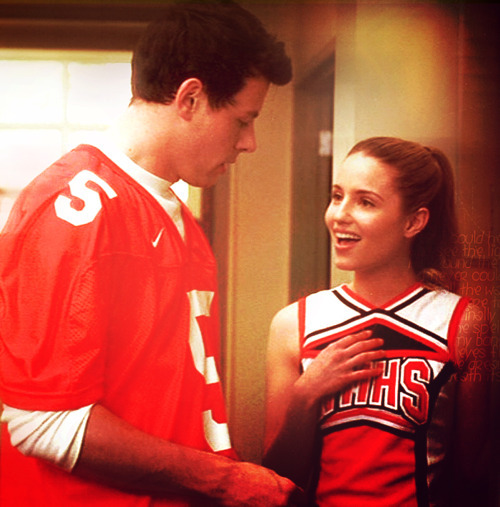
Stereotypically, the story starts with a new girl trying to fit in and the ‘popular’ jock guy takes her fancy. The ‘popular’ cheerleader type girl some way or another makes the new girl's life hell out of jealousy. The new girl has to battle her for public support, work out how to win the jock over and not to become as mean as the mean girl in the process. Usually, the mean girl has a big plot to discredit the new girl towards the end of the film and everything back fires and results in a happy ending for the heroine of the film.
Typical iconography for chick-flick films are well-groomed characters/students and people with phomaterial values with lots of status symblos int erms of clorthes, possessions, gadgets etc. Also settings such as big mansion America style d houses and high schools will be evident. Like a lot of chick-flicks there is often a ‘special’ area or place that the protagonist may escape to throughout the film for inspiration which turns out to be ruined to hurt her.
The setting would be and expensive county lifestyle with a small population in a small town outside I large city with only one high school where everyone attends and knows one and other. Everyone’s fashion sense (costumes) would be of similar taste this will therefor highlight that people follow crowds. This will reinforce to the audience the size of this town and what could potentially be something small could be blown out of proportion. The main characters will evidently be the ones the viewers will end up relating to the most and develop sympathy or hatred for one. The male (jock) and female (cheerleader) are just stereotypical spoilt teenagers that are very much caught up in the dramas of their teenage social life. The male is often either described as the hunky, good looking, popular, sporty but failing student or the perfect catch of attractive, popular, sporty and the grades to match. The female (villain) is often portrayed as the mean, intimidating, pretty good physique girl. Finally, the second female (protagonist, heroine or victim) is portrayed as the nerdy, down to earth, perfect grades, average appearance and innocent girl.
Lighting has no specific connection to the film as most chick-flicks differ from day to night time. Commonly, one sees that the parties, proms and sleepovers are evidently found happening at night and the school, shopping and perhaps revision at one and others house sis found happening during the day. Overall, lighting has no specific significance in the chick-flick genre. The props would be very general. Most everyday life equipment would be used as chick-licks deal with everyday life situations in an exaggerated and un-realistic manner. Significant props to perhaps highlight maybe a secret diary, the cars driven by each main character and the typical accessories each character may often have in hand throughout. (I.e. cheerleader type girl maybe her mobile phone).

Lighting has no specific connection to the film as most chick-flicks differ from day to night time. Commonly, one sees that the parties, proms and sleepovers are evidently found happening at night and the school, shopping and perhaps revision at one and others house sis found happening during the day. Overall, lighting has no specific significance in the chick-flick genre. The props would be very general. Most everyday life equipment would be used as chick-licks deal with everyday life situations in an exaggerated and un-realistic manner. Significant props to perhaps highlight maybe a secret diary, the cars driven by each main character and the typical accessories each character may often have in hand throughout. (I.e. cheerleader type girl maybe her mobile phone).

For camera angles, a lot of 360 degree angles may be used to show locations of the town to show the houses of the neighborhood the school field and corridors where many of the main scenes will take place. A lot of close-ups of the main characters’ face are used to establish how different the characters are from one and other. A series of split screens are often used to demonstrate two of the same actions happening at once on the screen to show contrasts. Finally, a lot of shot reverse shots just for conversations and sometimes something may be happening over the character’s’ shoulder that is about the character watching (i.e. talking negatively about her).
The majority of the sounds are diegetic as chick-flicks include a lot of dialogue throughout the film. This is often fast-paced and quite jargon-heavy to create the idea of an exclusive group or in-crowd. Additionally, non-diegetic sounds such as explosions or enhancing sounds in fight scenes are not necessary for chick-flicks films. However, an important factor in chick-flicks with the sound is the music. This is extremely important in chick-flicks as it sets a specific tone for the film genre. Voice-overs are often used to convey the main character's inner thoughts or how they feel about another character. This is a typical technique used in chick-flicks as this genre includes a lot of ‘talking behind ones back’.
Key elements/Themes
Drugs - ‘Get him to the Greek’, ‘pineapple express’…
Sex – ‘Friends with benefits’, ‘American pie’…
Romance – ‘P.s I love you’, ‘The Notebook’, ‘Twilight’, ‘50 first dates’…
High School – ‘Mean girls’, ‘The O.C’…
Pregnancy – ‘Juno’, ‘Knocked-up’, ‘The back-up plan’…
Alcohol – ‘The hangover’…
Narrative Structure
Equilibrium theory: Russian theorist, Tzvetan Todorov, suggests that all narratives follow a three part structure. They begin with equilibrium, where everything is balanced, progress as something comes along to disrupt that equilibrium, and finally reach a resolution, when equilibrium is restored.
Stock characters
A stock character is a dramatically emphasised character that represents a stereotypical personality that is repeated throughout a film/TV series.
In teen dramas, they usually include a large range of different cliques and stereotypes of teenage life. There will always be the three typical main characters in a teen-drama chick-flick of which consists of the ‘popular’ girl that everyone envies and wants to be. The famous rich spoilt girl of the town that has a bitter personality towards outsiders and nerds. In which the ‘nerdy’ or new girls comes in. Who gets on with life but somehow finds herself competing against the popular girl to fight over the ‘popular’ boy. Normally, the ‘nerdy’/new girl wins the ‘battle’ and all ends positively. Finally, there is the ‘popular’ boy who is the typical attractive, sportsmen who usually doesn’t get a huge role. He is used as a catalyst to spark off the ‘disruption’ within the equilibrium theory. Additionally, a group of friends who add to perhaps the intimidation of the ‘popular’ girls’ image. The good-looking group of boys surrounded by the ‘popular’ boy to reinforce his popularity and finally, the ‘nerdy’/new girls two friends who are very different the rest of the average teenager in this specific town…also known as the ‘outsiders’.
The following are a list of examples of a type of fictional characters that may be included in a teen-drama chick-flick and examples of characters in existing films:
-Rebel - The outcast/outsider that rebels against teenage conventions and society. ‘Too cool for school’ type. People often think they are weird but this is usually not the case.


-Bimbo (cheerleader and co) - The popular girl that everyone dreams to be like in High school. Tries too hard, spoilt by daddy, has her followers with her at all times, always on phone, perfect physique and often starts off having the jock as her boyfriend.


- Jock - The attractive, good grades (or really stupid), spoilt, athlete. That again everyone stares at in the corridor. Always has his crew of ‘quarter back’ in the baseball team by his side. Throws all the best parties and gets away with murder. Cheerleaders constantly by his side. Sometime a bully.


- Math elite - The nerdy/new girl or group that has the brains and everyone makes fun of. In reality they will get further in life.

- Plain Jane – Often casted as the nerdy/new girl role. Modestly pretty, clever, innocent, kind and shy. She is plane but once one gets to know she has more to offer. Very down to earth and hated by popular girls as she is effortlessly ‘the girl next door’. The jock often ends up with this type.

Analysing Genre – Techniques to consider
Mise-en-scene
Setting
We are using a stereotypical setting due to it being a teen drama chick-flick.
For these reason the two main setting our sequence will be based in will be their bedrooms and the High school they attend. It will begin immediately in the bedroom of both two main female characters. The bedroom of someone tells the audience a lot about one’s character so we thought this would be an appropriate place to commence the sequence. The layout of the bedrooms of both girls will show their contrasts in their personalities without having to use dialogue.
The second location used in our 2 minute sequence, the high school will be used. This is a typical location teen dramas focus on so this again was an appropriate decision according to our genre. The specific scene will be filmed in the corridor by lockers portraying the famous stereotypical ‘corridor scenes’ where significant scenes happen.
Costume
As we are in school we may be perhaps limited as to how we can represent our main characters as standing out ones. However, perhaps we will tweak the uniform for the popular girl and guy to make them stand out more by making it edgy and customised. This will show their ability to change trends by rebelling against the school rules. We will have their crew following them wearing similar customised uniforms showing that people follow the popular character’s and shows their strength and popularity. On the other hand the nerd female’s uniform will be well worn (how it should is expected to be worn) and plain.
Props
We will use props such as:
Mobile phones - To emphasise teenagers love for them.
Kindle - Shows our era as well as showing certain characteristics of specific characters.
Books - Ties in with the school setting.
Ipod/Ipad - Perhaps to show that the popular girls aren’t in full school mode.
Make-up
Make up is big part of our costumes because the majority of our two minutes shows the girls getting ready in the morning for school. During this the make-up load will be the deal breaker into differentiating the opposition between the popular girl and nerd girl.
Lighting
Lighting is not very significant due to our chosen genre. However, we will use a bright setting as our 2 minute sequence is meant to be set in an early morning light. This cannot be certain as the weather may change but this will not affect our filming.
Camera angle and movement
We will use a variety of establishing shots to show each setting before the dialogue and actual scene commences. Two shots as well as shot reverse shots will be used for any possible exchange in conversation between two people.
Panning shots are very effective as it shows ones surroundings in the shot as well as easing smoothly into the shot. A variety of close-ups and medium shots show the characters physical state and movement and facial expression and emotions. Zooms and slow motion movements will be perhaps used to emphasise a significant moment. Possible P.O.V shots can be used when scenes of one walking down corridors by certain characters to portray to the audience their state of mind and make them feel a part of the action and film.
Editing
Transitions - Make each shot change from one and other smoothly.
Graphic match - One girl leaving house as another girl arriving at school.
Cross cutting - Of the same actions happening but in different locations and at different times.
Analysing Genre – Sound and Style
Types of Sounds
Silence - no sound present on camera or to the audience.
Synchronous sound - Sound that is appropriate for what is happening on screen or to a characters current emotion.
Ambient Sound - Background sound picked up during filming (I.e. Footsteps or closing doors).
Non-Diegetic - music added in for the audience, often a current popular song with relevant lyrics
Diegetic - Music that is heard in the story world by both characters during filming
Voice-over - A character that narrates there state but only the audience can hear. (I.e. represents thoughts).
News Feed
To demonstrate our titles we are using a large bold bright colour font that will come up on the mirrors when the two girls are getting ready which will create a 'girly' effect. They will appear when the girl appears on screen with the real name. Non-diegetic of the track we chose will be playing whilst these are shown. Another scene when the popular boy arrives at school in the character and all the girls make way his name will appear as well as he is also a significant character. This is a significant scene completely showing the popular people's position in the sequence.
Friday, 23 November 2012
Storyboard Second Draft


We have made some changes to our storyboard based on our recent tasks, as we have seen some weaknesses. We have thought about how to work the slpit screen idea into our sequence and expanded the end section. We have also added more specific times / places for our titles and credits. We are still not entirely confident about our end sequence. However, we have decided to film our intital idea and if we are not happy, re-storyboard and film again. We cdan make this decision because we are filming this sequence in school and so there are easy opportunities for re-filming. if we were filming in one of the loctions further away, we would re-plan now and film different versions. In the real media world, there probably wouldn't be the luxury of seeing if something works and then re-filming as cast and crew have to be paid and schedules are very tight. However, we do have this luxury so we want to take advantage of it.
Thursday, 22 November 2012
Researching Your Chosen Genre
I spent some time researching chick flicks, because our coursework is going to be a chick flick.
Stereotypical Elements:
In a chick flick, the majority of the scenes tend to take place around a high school, a party, someones house or a shopping center, and they generally deal with multiple issues, like relationships, drugs, school, alcohol etc.This is good for us because we are easily able to access these settings.
Films of this kind rely on stock characters:
Films of this kind rely on stock characters:
The popular kids: Shot from 'White Chicks'

The geeks: Shot from 'The Big Bang Theory'

The Hot Guy: Shot from '10 Things I hate about You'

The Protagonist: Shot from 'Twilight'

The plot is usually follows quite conventional lines, with the popular girls/crowd and the hot guy being somehow connected, and the main character being on the outside, possibly having a hard time at school. Then something happens that changes everythin;, there's a huge blow out or fight, the plot thickens and becomes tense, and we don't know if our protagonist and her potential love are going to make it. Of course, they pull through, and the outsider girl becomes popular, and she and the hot guy live happily ever after. In order to make sure we sympathise with the outsider from the start, there is often a voiceover, with the main character talking over the clip as we see what they see. I think this helps us familiarise with the character. The outsider status is also important because it's a classic narrative technique - as the outsider learns about the key characters and the rules of this world, so do we as the audience.
Common Camera Angles
Shot Reverse Shot: because there tends to be a lot of conversation - social activity such as parties
Two Shots: lots of two shots of friends, or the main character and her crush
Group Shots: again because of the whole social element, it makes the film seem more relatable to it's audience as seeing people in groups is natural.
Shot from 'John Tucker Must Die'

Hand Held Shots- often used in situations where the character is in a crowd, perhaps in a corridor at school filled with lots of people
POV Shots and Close Ups: these help the audience establish a relationship or connection with the characters, because we're able to clearly see the emotion on their face, and we're able to see things in the same way they do.
Shot from '17 Again'

Mise-En-Scene:
The mise-en-scene of a film is extremely important, because it helps the film seem more believable and relatable to the audience.
Costume: The costumes can help identify characters without there even being any dialogue, and also gives you information about the character, like their personality, from what they're wearing.
Lighting: The lighting is generally quite high key - chick flicks/ rom coms are usually have pleasant story lines with nothing too serious going on, and if there is a comical edge is given to it so the audience still enjoys themselves, so even at times where the scene is set at night, they usually have lighting so it isn't completely dark and we can focus on the characters' reactions and emotions.
Setting: The settings are generally in a high school, and then this makes the film relatable as well to a whole range of people, as we have all experienced this, not just teenagers.
I think that for our sequence, 'Just A Girl', we'll take tips from our research to try and make ours look light, and have reasonably high verisimilitude.
For our props, we've decided to make the 'Popular Girl' really done up with make-up, so she looks well groomed for school, as opposed with the 'Geeky Girl', who won't have made a huge effort with her appearance, which should help highlight the differences between the two. We're also going to have our cast wearing their school uniform, as that will make the most sense as it's mostly set in a school, so it'll look believable.
Researching Chosen Genre
Researching Chosen Genre
High school/ teen drama/ chick flick- Stereotypical Elements
Narrative structure and Characters
A high school chick flick mainly focuses on the events and daily routines of high school, and usually exaggerates the ways of teenage life. There are always stock characters which are dramatically emphasised to represent a personality- it is repeated throughout the film. For example Mean Girls is an exaggeration of stereotypical aspects of teenage life, there are so many different friendship groups and each have certain personalities: like the Jocks, Goths, Emos, ‘the plastics ‘, and the geeks. There would be some groups in a normal high-school but they wouldn’t be a distinctive as in films.
A typical portrayal of a high school chick flick normally follows two characters of completely opposite type: one being geeky and unpopular, the other being pretty, popular and girly. There is normally always friction between both characters where they dislike each other, mainly because of their differences. Its starts off with the popular girl having a great life with loads if friends and the geeky girl having a miserable time and being either lonely or only having a few friends. Then a major event takes place either having a bad effect on the geeky girl which changes people’s opinion of the popular girl and leads her to be disliked or that people start to see the geeky girl differently and this annoys the popular girl. It normally ends with both girls being happier and normally being friends.
In teen drama Todorov’s classic narrative structure can easily be applied:
· Starts with opposition from different social groups or characters (like a geek or popular girl)
· This is followed by an event which causes disruption which causes a fall out
· The disruption is recognised (leaves geeky girl feeling sad, or popular girl feeling jealous)
· An attempt to repair disruption (revenge, or getting relationships back)
· Back to original situation, or peace between both social groups


Mise-en-scene
Setting
The setting of a teen drama / chick flick will almost always be a high school, there might also include a few scenes at a school party or house party. It is also likely to feature the main character’s houses to give the viewer an idea of their surroundings, characteristics and personality. For example in mean girls most of the film is in the school, and at the beginning of Wild Child we see Poppy's bedroom and it shows her 'girly' personality.


Costume
Costumes and appearance of characters in a high school/ chick flick genre significantly show the characters personality. Below is a picture of the main character of Wild Child, who is a typical American girly girl. This is clear for the viewer, because she is wearing designer clothes, is wearing jewellery and has big sunglasses on. This is similar in Mean Girls when the stereotypical popular girls all wear short skirts and wear mainly pink.


Sound In chick flicks/ teen dramas a lot of non-diegetic music is used. This music helps express the emotions of the characters, and also engages the viewer. A voiceover is also commonly used normally used to show the thoughts of a character, and because it’s a teen-drama sounds like a diary entry which helps the viewer understand the characters age, and the character’s personality. Pop music of the time is a common choice as it will be familiar and therefore relatable for the audience. Often sound track albums can be released afterwards.
Techniques to Consider
Setting
We’re using the typical settings of a chick flick/ teen drama: by using both of the main characters houses, and a school. The characters houses will allow the viewer to be introduced to their characters personality’s almost instantly, in most teen-dramas the bedrooms of the characters show their interests and personality’s and by using props we will be able to show this in the bedrooms. We are using the last bit of our extract to show school life of the girl, setting it in a school.
Costume
By looking at films like Mean Girls and Wild Child it is obvious that costumes have a major impact on helping to identify the character and their personality. Being set in a school, we will have both girls in school uniform, although accessories will help identify the differences in our two main characters.
Subscribe to:
Posts (Atom)